



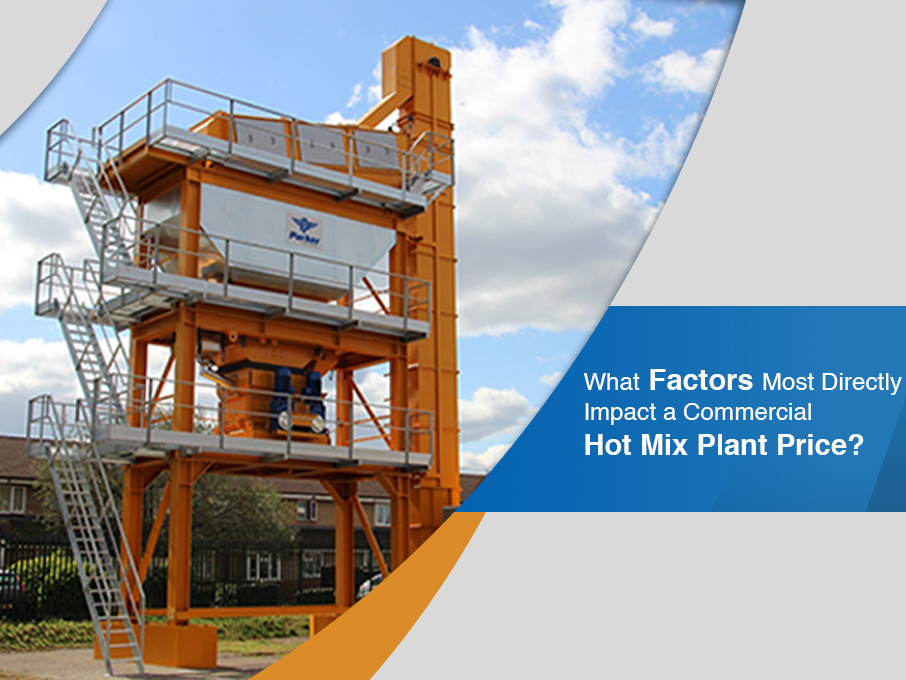
Managing large-scale infrastructure projects across India is a demanding, high-stakes endeavour. Site managers face unique daily challenges when selecting and operating heavy industrial machinery. The constant transition from handling highly abrasive aggregates to enduring sweltering heat creates a rigorous operational environment. Combined with high-pressure project deadlines, fluctuating raw material qualities, and tropical weather conditions, choosing the right equipment is the most consequential decision a contractor will make in asphalt road construction.
At Parker Plant India Private Limited, our core philosophy is that choosing heavy equipment must centre on delivering custom-engineered systems that provide real-world functional worth, dependability, and lasting freedom from operational disruptions. This comprehensive guide outlines the critical differences between an asphalt batch mix plant and a continuous asphalt drum mix plant, the engineering science behind how they operate, and how to choose the right system to ensure long-term project health and profitability.
What Is an Asphalt Batch Mix Plant?
Core Definition: A sophisticated facility designed to produce hot mix asphalt in highly controlled, discrete batches rather than a continuous stream.
The Technical Process: Aggregates are heated and dried inside a rotary drum. A hot elevator transfers these materials to a vibrating screen unit where raw aggregates are separated by size and stored in dedicated hot bins. Materials are then precisely weighed according to a strict mix recipe and discharged into a twin-shaft pugmill, blending with accurately measured liquid bitumen to yield high-quality asphalt.
Key Characteristics:
- Production Type: Discontinuous (typically outputs 1 to 3 tonnes per batch).
- Quality & Flexibility: Exceptionally high due to weight-based component proportioning. Seamlessly transitions between diverse mix designs during a single shift.
- Best Suited For: Projects requiring strict adherence to variable municipal specs, multi-client supply, and premium highway surfacing.
Key Takeaway: The asphalt batch mix plant remains the ultimate option for versatility and uncompromising quality control.
What Is an Asphalt Drum Mix Plant?
Core Definition: Commonly referred to as a continuous drum mix plant, this system simplifies asphalt production by continuously drying and coating materials within one single rotating drum.
The Technical Process: Cold aggregates are proportioned accurately at the cold feed bins and fed continuously into the drum. As they move through, they are heated and dried in the initial zone. Liquid bitumen is then injected into the later section of the exact same drum to coat the hot aggregates on the fly.
Key Characteristics:
- Production Type: Continuous (delivers an uninterrupted stream of hot mix asphalt).
- Quality & Flexibility: Ensures reliable performance, although it relies on volume-based proportioning. Modifying mix requirements involves a short shutdown to reset the feeders and remove the existing material from the drum.
- Best Suited For: Long expressway stretches, rural road networks, and dedicated project sites requiring a single mix specification for weeks.
Key Takeaway: The continuous asphalt drum mix plant represents the fastest, most cost-effective asset for high-volume, single-spec production.
Batch Plant vs Drum Plant: Feature Comparison (2026)
| Feature | Asphalt Batch Mix Plant | Asphalt Drum Mix Plant |
| Production Method | Discontinuous (Batches) | Continuous Flow |
| Mix Quality/Accuracy | Extremely High (Weight-based) | Moderate to High (Volume-based) |
| Flexibility | High (Instantaneous changes) | Low (Requires clearing the drum) |
| Initial Investment | Higher | Lower |
| Maintenance | Higher (More moving parts) | Lower (Simpler design) |
| Space Required | Large footprint | Compact footprint |
| Portability | Typically stationary | Highly portable models available |
Which Is More Cost-Effective: Batch or Drum?
When evaluating the total hot mix plant price, buyers must look past the initial price tag to evaluate the total cost of ownership and long-term operational efficiency.
The continuous drum mix plant requires a lower initial investment because of its simplified design and delivers marginal fuel savings per tonne by reducing heat loss during operation. Conversely, batch mix plants prove far more cost-effective in complex commercial markets. If your model relies on selling mix to various local contractors with unique design parameters, the batch plant saves vast sums by preventing the generation of out-of-spec transition waste.
Which Plant Offers Better Mix Quality and Flexibility?
Mix Quality Dominance: The asphalt batch mix plant delivers inherently superior mix accuracy because it screens the aggregates after thermal drying, physically re-separating them into hot bins before exact load-cell measurement. A continuous drum plant relies exclusively on cold feed gate calibration; if raw aggregate moisture spikes unexpectedly, it can subtly shift structural volumetric ratios.
Recipe Flexibility: A batch plant can easily load base course into one tipper truck and immediate surface wearing course into the next vehicle. Changing recipes on a drum plant requires pausing for the old mix to fully evacuate the cylinder and verifying the new continuous stream has stabilised.
Production Capacity and Site Suitability
- 100 TPH: Optimised for small municipal developments or patching contracts. At this tier, portable continuous drum plants are highly favoured due to rapid transport mechanics.
- 160 TPH: The ideal “sweet spot” for mid-tier road contractors. This capacity matches standard highway paving rates comfortably across both plant designs.
- 200+ TPH: Strictly mandatory for major multi-lane expressways and airport runways, providing extreme high-volume efficiency.
Site Suitability:
Batch mix plants are perfectly tailored for urban environments. Their vertical architecture makes them easier to completely enclose for advanced acoustic insulation and pair with heavy-duty baghouse filtration systems. Conversely, the continuous asphalt drum mix plant reigns supreme across open country due to compact frames that allow effortless transport over tight rural bridges.
Do You Know?
2026 Machinery Management Developments
Factors Influencing Hot Mix Plant Price and Cost Strategies
Understanding the factors influencing the hot mix plant price, such as raw material fluctuations, eco-friendly policy upgrades, and supply chain disruptions, is essential for buyers looking to answer “how much does an asphalt mixing plant cost.” Adopting effective procurement strategies helps buyers mitigate price volatility risks and make more strategic investments.
Source: https://macroadmachine.seesaa.net/article/Understanding-Factors-Influencing-Hot-Mix-Plant-Price-and-Cost-Strategies.html
2026 Hot Mix Plant Investment & Market Insights
Based on industrial asset data, equipment capital costs are directly driven by configuration. Continuous drum mix units provide a cost-effective setup starting from $40,000, while high-precision batching facilities command $90,000 and above. Commercial plant operations typically offset machinery costs to achieve full net profitability within 5 years of deployment.
Source: https://ltasphaltplant.com/hot-mix-plant-cost/
The Operational Process & Environmental Regulations
Batch Plant Flow: Cold aggregate feeders supply raw stones into the primary drying cylinder. An industrial burner heats the mass thoroughly. A vertical hot elevator lifts the materials up to elevated screen decks. Vibrating screens sort aggregates into hot storage compartments. Stones are dropped onto precise weight hoppers, then plunge into a twin-shaft pugmill where metered bitumen is added. The batch mixes and discharges safely into a waiting truck.
Drum Plant Flow: Variable speed cold bins meter aggregate ratios based on volumetric calculations. Proportioned stone mixes travel via conveyor belts into the rotating drum. A burner dries and heats the mix. Bitumen and mineral fillers are injected continuously into the rear mixing section. The continuous stream of hot mix asphalt exits the drum into a drag slat conveyor for immediate silo storage.
Environmental Regulations in 2026:
Primary dust collection pulls larger particulates out of the airflow via cyclones and cycles them back into the aggregate mix. Secondary dust collection utilises a premium Baghouse Filter system, forcing hot exhaust through specialised fabric bags to trap ultra-fine matter. Modern bitumen mixing plant setups integrate advanced vapour capture systems that route heavy fumes back into the burner core for eco-friendly thermal destruction.
Maintenance Checklist
| Component | Batch Plant Maintenance Focus | Continuous Plant Maintenance Focus |
| Dryer Drum | Check internal lifter flights; inspect trunnion rollers for parallel alignment. | Critical: Audit mixing flights and bitumen injection lines for asphalt buildup. |
| Screening Unit | Inspect screen mesh weekly for blinding or localised tears. | Not applicable (no hot screen decks present). |
| Pugmill / Mixer | Check paddle tip clearances and internal liner plates for aggregate erosion. | Not applicable (mixing happens directly inside the drum). |
| Elevators | Monitor hot elevator chain tension and bucket rivets. | Inspect drag slat conveyor links and wear floor plates. |
Why Choose Parker Plant India Private Limited?
- Precision Engineering Discipline: We view the fabrication of continuous drum plants and batching facilities as an exacting science, avoiding generic templates.
- Component Reliability: Every asset features heavy-duty steel structural reinforcement and high-tier electrical control components built to endure brutal site environments.
- Enterprise Support Network: Instead of forcing you to source third-party help, our comprehensive nationwide service contracts bring certified factory technicians directly to your site to protect your profit margins.
Frequently Asked Questions (FAQ)
Q1. Is an asphalt batch mix plant better than a drum mix plant?
Neither model is universally superior. A batch plant is the best option for high-precision, variable-recipe urban work. A continuous drum plant is superior for high-volume highway projects.
Q2. What is the typical hot mix plant price in India?
Pricing fluctuates based on total hourly output (TPH), plant type, and secondary baghouse configurations. Reach out to Parker Plant India Private Limited for a clear, customised commercial quote.
Q3. Are mobile hot mix plants only available as drum plants?
No. While continuous plants naturally lend themselves to highly portable frames, mobile batch mix plants do exist. They simply require more crane support, site space, and assembly time.
Q4. How important is a baghouse filter?
It is completely non-negotiable for modern projects. Operating without proper filtration can result in sudden site closures and hefty municipal fines.
Q5. Does Parker Plant India Private Limited offer service contracts?
Yes, we provide extensive enterprise service contracts across our entire hot mix plant machinery lineup, eliminating unexpected downtime while maximising your real-world ROI.
Conclusion
Navigating India’s demanding infrastructure deadlines requires moving past basic patch-up repairs. The combined forces of intense production schedules, heavy material loads, and harsh site environments require an advanced, engineering-grade approach. Proper enterprise servicing clears away operational bottlenecks, ensuring your project stays on track. We understand that when contractors Google search for a “hot mix plant near me,” they aren’t just looking for nearby steel, they are looking for accessible, localized support they can trust. Schedule a bespoke technical consultation with Parker Plant India Private Limited today. Let our engineering experts evaluate your equipment and help you achieve the consistent, high-quality output your business deserves.
Parker Plant Engineering Team Profile
Every educational guide, technical breakdown, and operational guideline published by Parker Plant India Private Limited is rigorously researched and cross-verified by our senior team of industrial engineering veterans. Grounded in real-world industrial experience and verified against current international manufacturing standards, our technical content is built to help you make confident, informed decisions about your heavy machinery investments.