

Introduction
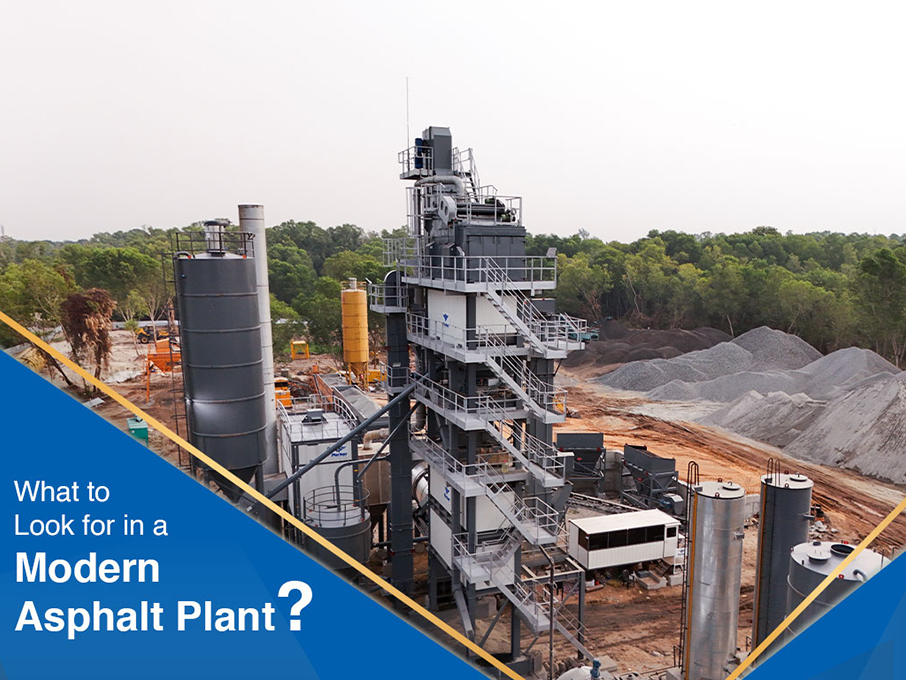
When you’re in the market for an asphalt mixing plant, choosing the right equipment isn’t just about capacity or price. You’re investing in a high-value asset that must deliver reliability, efficiency, versatility and return on investment over many years. In this guide we’ll walk through the key criteria you should evaluate and highlight how Parker Plant’s asphalt plant range meets those criteria.
1. Track Record & Manufacturer Reputation
Before anything else – evaluate who makes the plant. A manufacturer with decades of experience, global installations and strong service support is a safer bet.
Why it matters:
- A long‐established manufacturer will have refined design, know common failure points and offer better parts & support.
- Your plant might be in continuous operation in remote or demanding sites, so reliability backed by service matters.
- If you go to resell, brand reputation helps value retention.
How Parker Plant scores:
- Parker Plant (UK) dates from 1911 and boasts over 100 years’ experience.
- Their asphalt plant range has been installed globally (over 150 countries per joint‐venture info).
- They offer full service & support, as well as retrofits and upgrades of existing plants.
Tip: Ask for reference installations in your region (e.g., India / Southeast Asia) to check uptime, spare parts availability and local service.
2. Capacity & Production Type (Batch vs Drum/Continuous)
Your plant’s capacity must align with your project scope, while the type of mixing (batch vs continuous drum) influences flexibility and cost.
Key considerations:
- Capacity (tph): Make sure the plant output matches your peak demand, but avoid severe over‐capacity (wasteful) or under‐capacity (bottlenecks).
- Batch plants allow greater flexibility (different mix types, frequent changeovers) but often higher cost.
- Continuous (drum) plants are simpler, potentially lower cost, but less flexible for varying mixes.
How Parker Plant’s range addresses this:
- Their site lists batch and drum‐mix plants from 4 to 400 tph.
- Example: The “DrumStar” continuous drum‐mix plant offers capacities from 75, 100, 150 and 200 tph.
- For smaller jobs: their spot‐patching / mobile plants like SpotMix 150 (4-9 tph) for small repair contracts.
Tip: For a typical mid-sized road project, assess your annual tonnage and peak day demands, then select a plant that offers a margin (say +10-20 %) rather than running it at 100 % constantly.
3. Mobility & Installation Flexibility
How easily you can install, relocate or repurpose the plant matters—especially if you take contracts in different sites, remote areas or need modular solutions.
What to look for:
- How much foundation work is needed.
- How quickly you can erect or dismantle the plant.
- Whether the plant is transportable (mobile units) or static (fixed installation).
- For modular plants: ease of shipping, containerization, quick‐connect modules.
Parker Plant’s offerings:
- They emphasize a highly mobile and unique range “ideal for competitive tendering …” Parker Plant
- Their mobile and modular plants: e.g., Containerised 40-80 tph series, modular StarBatch 80-200 tph, StarMix 80-400 tph. Parker Plant
- The DrumStar continuous plants also emphasise minimum foundations and full mobility. DirectIndustry
Tip: If your projects move frequently (for example, infrastructure contracting or remote roads), give strong weight to the plant’s mobility and setup/teardown time.
4. Mix Quality, Variety & Process Controls
A modern asphalt plant must deliver a consistent, high‐quality mix—whether standard asphalt, polymer-modified, reclaimed asphalt (RAP) blends, or specialty mixes for airports, heavy haul etc.
What to check:
- Does the plant support RAP (reclaimed asphalt) incorporation?
- Precision of control systems for temperature, moisture, binder addition, aggregate proportions.
- Ability to switch between mix types quickly.
- Compliance with local norms / specifications (for example for India or other regions).
- Uniformity of the mix and ability to maintain quality across shifts.
Parker Plant strengths:
- Their website lists “control systems … robust touchscreen display terminals or PC-based for larger installations.” Parker Plant
- They reference “additional equipment” like RAP systems, additive systems, hot mix storage, bitumen storage. Parker Plant
- They deliver both batch and drum options thereby covering a wide variety of mix types and production philosophies.
Tip: Ask for test data or case studies of mix uniformity from the manufacturer or from local customers. Also ensure spare parts and calibration support for the control systems.
5. Environmental & Energy Efficiency Standards
Increasingly important: dust controls, emissions, energy consumption, reuse of waste, modular design to minimize footprint.
Checklist:
- Dust‐collection / filtration system (bag filters or wet collectors) with clear ratings.
- Fuel efficiency of dryer drum / burner system.
- Ability to use waste heat or heat recovery systems.
- Compliance with local environmental/emissions regulations (essential in India, other regions).
- Layout and footprint: noise, dust, emissions in sensitive areas.
Parker Plant’s environmental credentials:
- For the DrumStar range: “dust emissions less than 20 mg/Nm³” listed. DirectIndustry
- They emphasise the “high-performance and environmental plant” arrangement in StarMix range. Parker Plant
- Being a mature manufacturer they likely have global approvals, but always verify local compliance.
Tip: Ask for environmental certification or performance data (emissions, dust, energy usage) for the model you are considering, and ensure local authority compliance (for example CPCB norms in India).
6. After-Sales Support, Spare Parts & Service Network
Even the best plant fails to deliver if you can’t get spares or service promptly when needed.
What to ask:
- Availability of local service networks in your country/region.
- Lead‐times for spare parts, stock of consumables (filters, burners, safety components).
- Whether the manufacturer offers retrofits or upgrades (extending plant lifetime).
- Training for operators and maintenance staff.
- Support for commissioning and startup.
Parker Plant’s support ecosystem:
- They explicitly mention “spare parts & aftersales” and dedicated service teams. Parker Plant
- They speak of “retrofits & upgrades for older installations” to improve performance. Parker Plant
- Because they are a global player, chances are better that parts and support channels exist—but you must verify for your specific location.
Tip: Ask for local references (other owners of Parker Plant units in India or nearby) and enquire about uptime, parts turnaround, technician availability. Factor in service into your total cost of ownership (TCO).
7. Total Cost of Ownership (TCO) & ROI Considerations
Beyond the purchase price, many costs accumulate: installation, foundations, utilities (gas/electricity), maintenance, downtime, energy, relocations, decommissioning.
Things to evaluate:
- Initial investment vs expected lifetime output: how many tonnes you will produce over the life of the plant.
- Operating costs: fuel or energy, parts, labour, maintenance.
- Downtime costs: how quickly can the plant be back online if something fails?
- Resale value: brand, modularity, mobility affect second-hand value.
- Flexibility: being able to shift capacity, adjust mix types, relocate sites helps improve ROI.
Parker Plant’s case:
- With the mobility offerings (containerised, modular) you get options to redeploy, improving ROI across multiple contracts. Parker Plant
- The versatility of capacities (4-400 tph) means you can scale.
- Their focus on reliability helps reduce unplanned downtime.
Tip: Develop a model: estimate your annual tonnage, expected years of use, downtime percentage, cost per tonne, and compute how many years until you recoup the investment. Choose the plant that hits your breakeven and keeps margin.
8. Localisation & Customisation for Your Region
Especially in India, or similar emerging markets, you’ll need a plant that’s adapted to local conditions: climate, power supply, materials, labour skills, regulatory norms.
Checkpoints:
- Manufacturer has a local presence or joint‐venture (for spare‐parts localisation, reduced freight)
- Plant components adapted for local aggregate types, binder types, climate (heat, humidity)
- Services and training tuned to the local workforce.
- Ability to adapt to local norms (RAP percentage, polymer modified asphalt, etc.)
Parker Plant in India:
- Their joint‐venture in India (Parker Plant India Pvt Ltd) is located in Mehsana, Gujarat.
- This indicates possible local manufacturing / assembly and perhaps local support.
- Good sign for sourcing spares and servicing locally.
Tip: Visit the local factory or assembly facility if possible, inspect local spares stocks, talk to other users in your region or country for feedback.
9. Future-Proofing: Flexibility & Upgradability
Your business needs may evolve—different mix types, higher capacities, RAP incorporation, stricter environmental norms. Select a plant that can grow with you.
What to ask the manufacturer:
- Can the plant incorporate higher RAP percentages?
- Are there upgrade kits or modular add-ons (e.g., additional cold feed hoppers, filler systems, polymer handling)?
- Is the control system modular and software-upgradeable?
- Are there options for remote diagnostics, predictive maintenance?
- If you begin with one capacity, can you scale later (e.g., adding modules, increasing throughput)?
Parker Plant’s messaging:
- Their mention of “additional equipment” such as RAP systems and additive systems shows flexibility. Parker Plant
- They offer spares, retrofits & upgrades. Parker Plant
Tip: Ask for a roadmap from the manufacturer: what upgrade paths exist for the model you’re buying, and how much would it cost to retrofit in future.
10. Practical On-Site Considerations
Finally, beyond the big picture, minor but practical details make a big difference:
- Footprint & layout: Ensure the plant fits your site—access roads, logistic flows, stockpile space, safety zones.
- Utilities: Power supply, fuel/gas, water for dust suppression, ancillaries.
- Installation time: How long between delivery and production? Minimum foundation, pre-wired units speed up commissioning. Parker claims “factory pre‐wired & fully tested” for some models. DirectIndustry
- Mobility and relocation: If you expect to move site, choose a mobile or semi‐mobile version.
- Safety features & operator ergonomics: ease of maintenance, accessibility for cleaning, safe access platforms.
- Training & documentation: Ensure operators are trained, manuals available, spare parts catalogue etc.
Tip: Before purchase, ask for a site layout drawing of the plant, expected installation schedule, utility requirements and a mock commissioning timeline.
Summary & Recommendation
If you’re shopping for a modern asphalt plant, the decision checklist above helps you balance capacity, mobility, mix flexibility, service support, cost, and future growth.
If you happen to be evaluating models from Parker Plant, what stands out is:
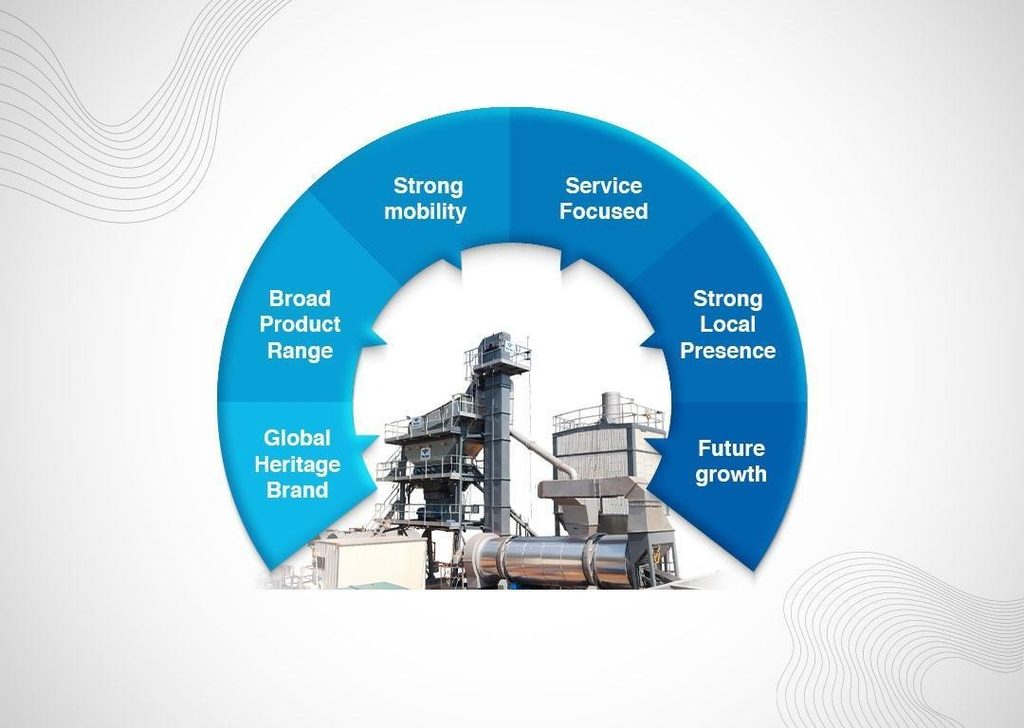
- A heritage brand with global presence and extensive experience.
- A very broad product range (from small patching plants to large static plants up to 400 tph).
- Strong mobility and modular options.
- A clear focus on service, spares, upgrades and environmental performance.
- Local presence in India (via Parker Plant India) which may ease support and logistics.
So, assuming you follow the evaluation checklist and match your business requirements carefully, a Parker Plant unit would be a strong contender in the modern asphalt plant market.